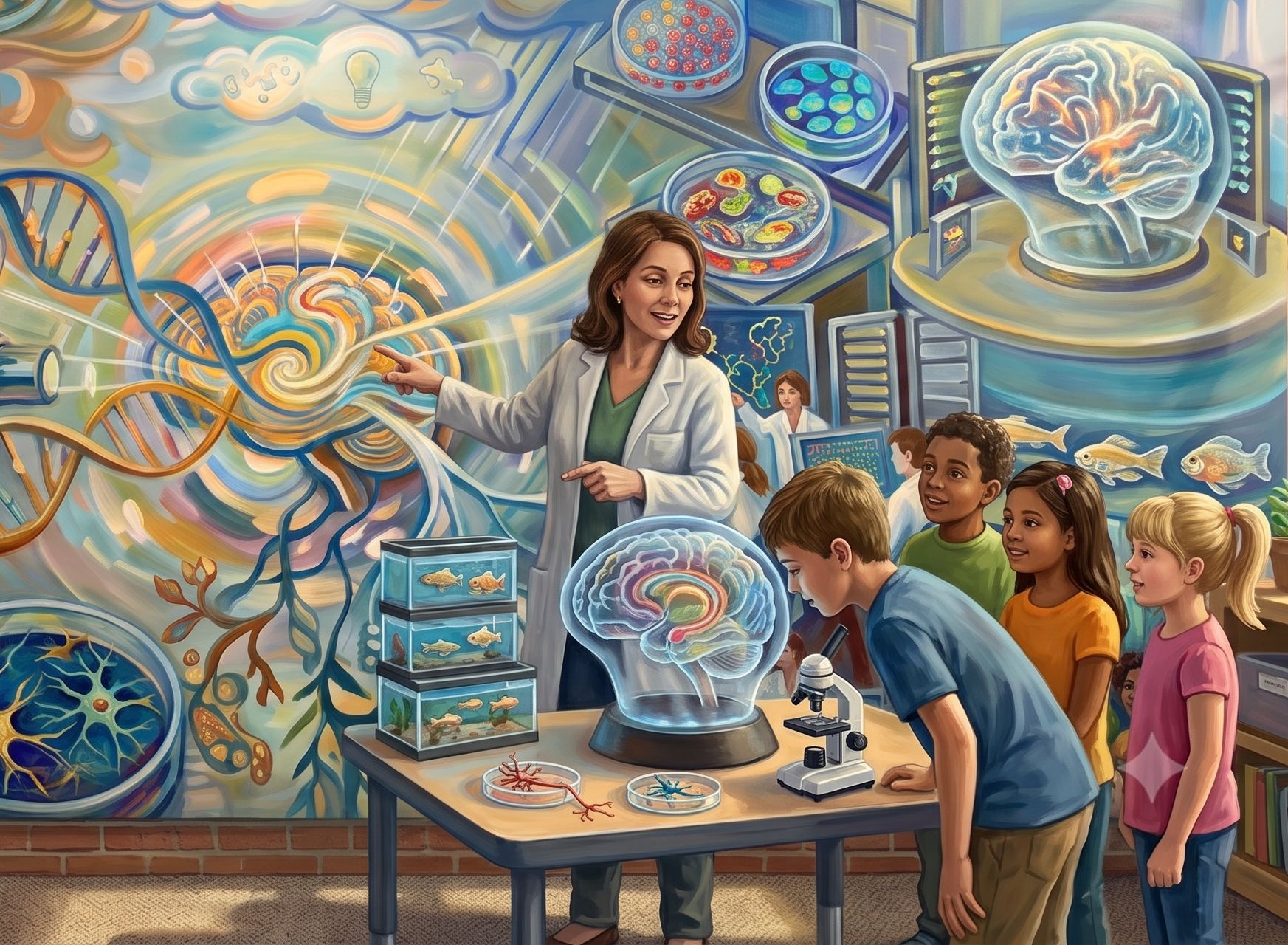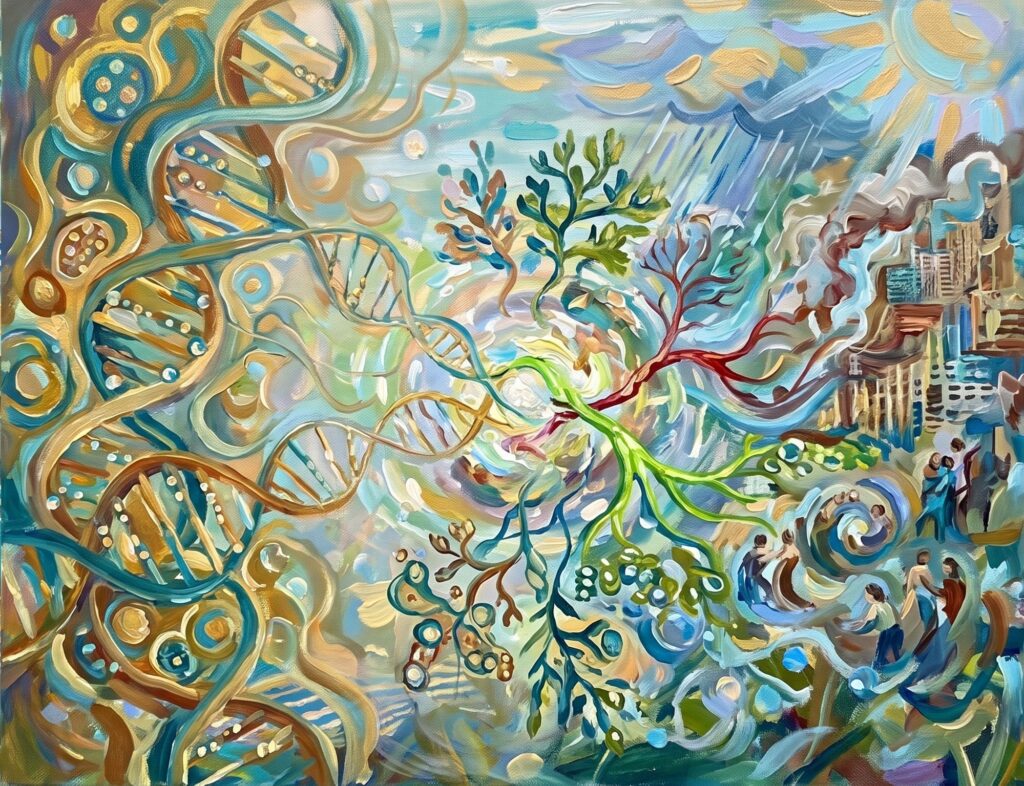
Our lab popularizes science so everyone can understand.
We run a knowledge platform about autism, brain development, and neurodiversity.
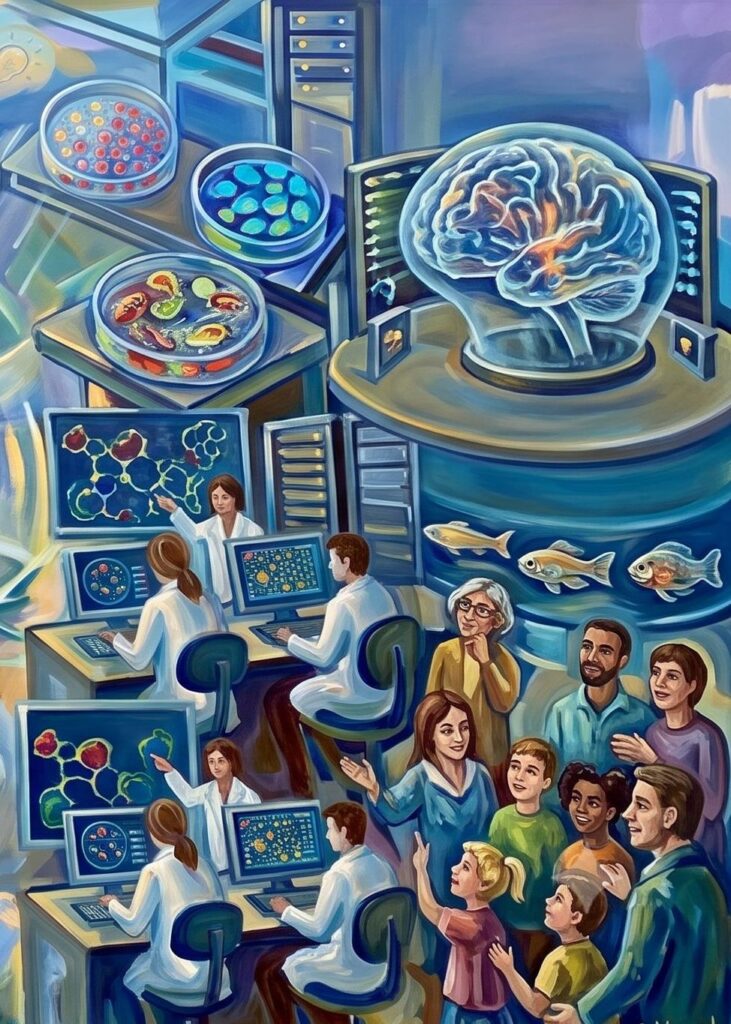
We teach the young generations about science, microscopy and animal models.
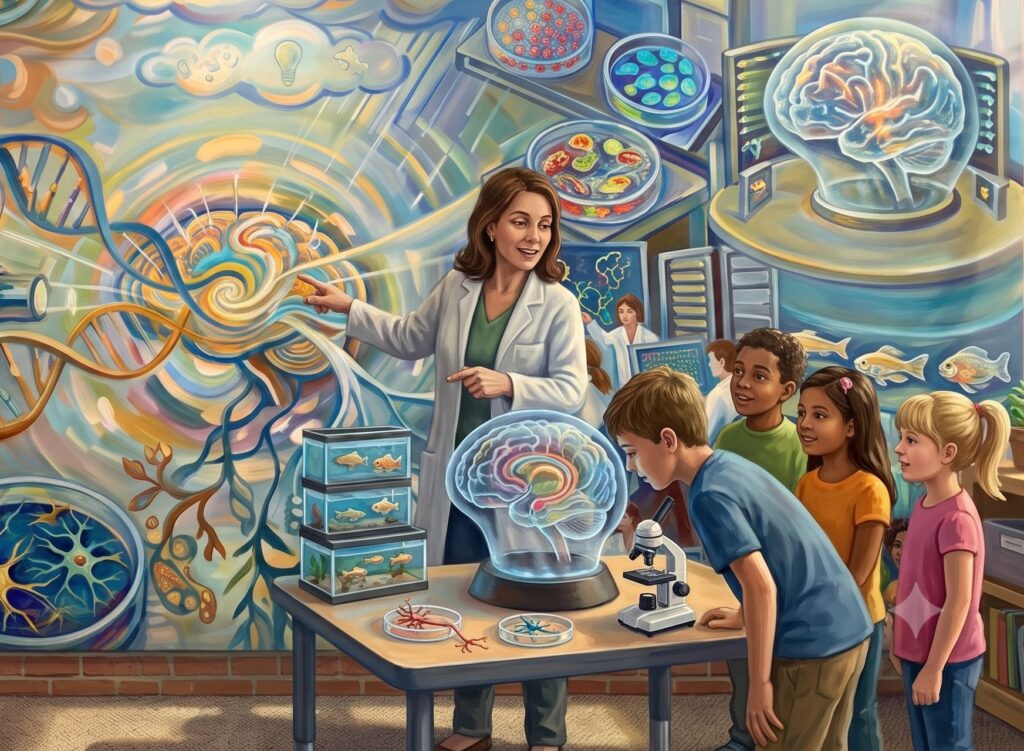
Lessons for high school pupils
The development of the nervous system is one of the most complex and fascinating biological processes, determining how we perceive the world, learn, remember, respond to threats, and build social relationships. Although most of us associate brain research primarily with humans, we actually owe many groundbreaking discoveries to a humble fish – the zebrafish (Danio rerio).
In zebrafish, neuronal activity can be monitored using special dyes or fluorescent proteins that change their light intensity in response to increased calcium concentration – a phenomenon that accompanies neural impulses.
Participants learn basic and advanced techniques for imaging brain development. Students observe an experiment in which the zebrafish brain responds to light. Thanks to special recordings, we see live how individual neurons “talk” to each other, transmitting signals and building communication networks.
The brain doesn’t form overnight – it’s a dynamic, multi-stage journey from cell to complex communication network. Thanks to zebrafish, we can not only observe this process up close but also learn how to support healthy brain development and prevent neurological and mental disorders. During the workshops, participants not only learn theory but also see a real developing brain in action. From fluorescent neurons to brain activity exposed to light – this is a unique opportunity to understand how our ability to think, feel, and act is born.
Open lectures for everyone
Neurodiversity is the idea that human brains don’t operate according to a single “correct” pattern. We differ in how we think, feel, and respond to the world—and these differences are a natural part of the population. In the lecture, we look into the brain from a scientist’s perspective to understand the origins of these differences, with a particular focus on autism. Why do some of us jump at the sound of a falling spoon, while others don’t even notice? What makes bright light physically painful for someone? We discuss how sensory systems work and what happens in the brain when they are more sensitive, less filtered, or differently organized. We’ll explain what overstimulation is and why it doesn’t result from “oversensitivity” but from very specific neurobiological mechanisms.
This lecture discusses current knowledge about the biological basis of sensory differences—from the functioning of inhibitory and excitatory circuits, through the role of neuromodulators, to changes in the organization of brain networks. We also demonstrates how genes and environment work together (GxE) to create unique developmental pathways. There is no single “autism gene” or risk factor—rather, it’s a network of subtle influences that dynamically interact with experience, prenatal stress, social environment, and early development, and together shape how the brain works.
And how do we know all this? That’s where animal models come in. Although no rat or fish “has autism”, thanks to precise genetic manipulations and controlled conditions, we can study mechanisms that are impossible to observe in humans. These models allow us to track how communication between neurons changes, how the brain responds to stimuli, and how social behaviors develop.
This leads to a key question: why are we studying this? Not to “fix” anyone, but to better understand the diversity of human brains, create more supportive environments, and include those whose way of perceiving the world differs from the majority.